
Who Can Run the Batch? The Scheduling Constraint Nobody Models
A schedule can be ready on equipment, materials and QC release and still fail at shift start because nobody qualified is on shift. Why operator qualification belongs inside the schedule.
 28 Oct 20269 min read
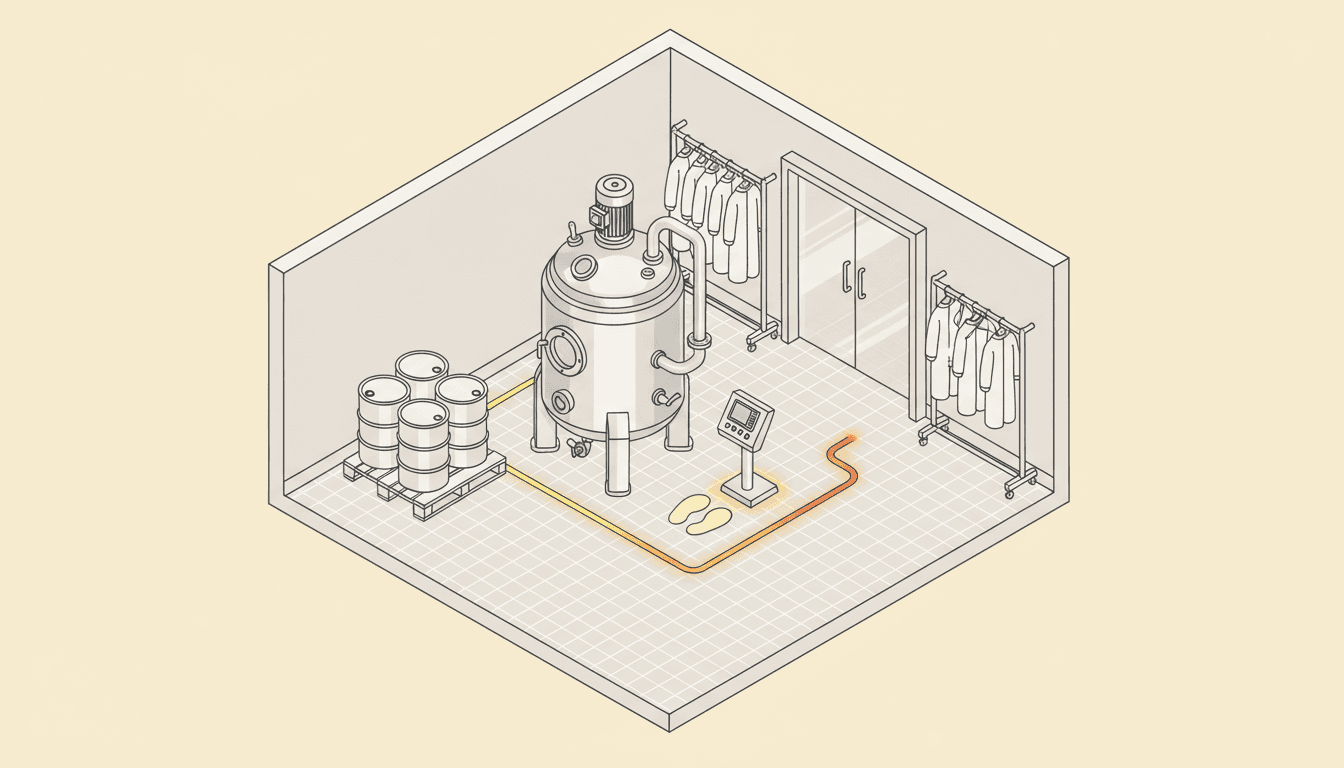
A schedule can be perfect on equipment, materials and QC release and still fail at shift start because nobody qualified is on shift to run it. In regulated plants, operator qualification, training currency and shift patterns are real scheduling constraints. Most tools treat them as an afterthought. Modelling them inside the schedule is one of the quieter ways to recover capacity.
The batch that was ready, and the person who wasn't
Picture a Tuesday night in a regulated plant. The reactor is cleaned and released. The raw material has passed QC. The schedule says the next campaign starts with the early shift.
Fifteen minutes before handover, the supervisor realises that the two operators trained on this product's critical steps are both off shift. A third has a training certificate that lapsed last week. Everything the plan accounted for is ready. The one resource it didn't model is missing.
This is not a rare edge case. It is what happens when scheduling treats people as interchangeable headcount instead of a constrained resource with rules.
A worked example: one absence, four consequences
Here is a hypothetical but familiar sequence in a plant running a multi-product campaign on shared equipment.
- 10 p.m. An operator qualified on the blending step reports sick for the next day's early shift.
- 11 p.m. The night supervisor checks the roster. Only one other operator is cleared for that step, and she is already booked on a filling line.
- 5 a.m. The planner swaps two batches to keep the blender busy. The swap changes the cleaning sequence, so a longer changeover is now needed in between.
- 10 a.m. The longer changeover pushes a batch past its QC sampling slot. The lab, which plans separately, now has an unscheduled sample and a late release.
No single decision in that chain was wrong. Each person acted sensibly with the information they had. The damage came from the fact that staffing, sequencing, cleaning and QC were four separate plans, so nobody could see the whole consequence of one absence before it landed.
That is the real cost of leaving people out of the model. It is not the absence itself. It is the cascade that follows because the schedule cannot absorb it.
Why workforce constraints break static schedules
In pharma, biotech and specialty chemicals, who may do a task is as tightly controlled as which equipment may do it. Four things make this hard to plan by hand:
- Qualification is per task, not per person. An operator may be cleared for granulation but not for aseptic steps, or for one product family but not another. The schedule has to match each task to people cleared for that exact task.
- Training expires. Certifications lapse, SOPs get revised and retraining is required. The set of eligible operators changes week to week, and the training system rarely talks to the scheduling tool.
- Shifts and rest rules limit coverage. A step that must run uninterrupted across a handover needs the right people on both sides of it. Leave, overtime limits and absenteeism change the picture daily.
- People are shared across functions. The same qualified operator may be needed for production, a QC sampling step and a maintenance verification. Each team plans separately, and the collision shows up on the floor.
Spreadsheets and static daily plans handle this by assumption: someone "knows" who can run what. That works until the one person who knows is on leave. The cost is quiet. Batches start late, qualified operators are overloaded while others sit idle, and planners spend the morning on phone calls instead of planning.
This is also a close cousin of the 30% problem, where cleaning, changeover, validation and QC holds consume more than 30% of staffed time (industry-reported) and are often poorly modelled. Workforce constraints are the same story from the people side: capacity that exists on paper but not in practice.
The hidden costs of unmodelled people
Because workforce problems get solved by phone calls and favours, they rarely appear in any report. They are still expensive:
- Idle equipment. A line that is ready but unstaffed is lost availability, and availability is a big part of why typical OEE in regulated process plants (35–65%, industry-reported) falls short of the 85% world-class benchmark (Nakajima / TPM).
- Overloaded specialists. When the schedule ignores qualification, the same few people get booked again and again. That raises fatigue and deviation risk, and it makes the plant fragile whenever one of them is away.
- Planner time. Each reshuffle is manual work: checking rosters, training records and equipment status by hand. That is time not spent on improving the plan.
- Compliance exposure. Putting an operator on a task without current training is a quality event waiting to be found in an audit. Planners avoid it, but only by adding buffers, and buffers cost capacity.
None of these show up as a single line item, which is why they persist. They are spread across availability losses, overtime, rework and delay.
The usual workarounds, and why they stop working
Most plants cope with a mix of habits that work at small scale:
- A skills matrix in a spreadsheet. Useful, but it is a snapshot. It does not know about today's absences or last week's lapsed certificates.
- Fixed crews on fixed products. This avoids the qualification question by locking people to lines, but it removes flexibility and breaks the moment demand shifts.
- Padding the schedule. Adding slack to protect against staffing surprises hides the problem and gives away real capacity.
- Relying on the experienced planner. Institutional knowledge is valuable, but it does not scale, and it leaves with the person.
As the number of products, lines and shifts grows, these workarounds stop keeping up. The constraint space grows faster than any one person can hold in their head.
What it looks like when people are part of the model
An adaptive scheduler treats operators the way it treats reactors and filling lines: as a resource with rules. In Bodhee Production Scheduling, workforce constraints sit alongside process, equipment, materials, maintenance and quality constraints, and the engine solves them together rather than one after another.
In practice that means a few things:
- Qualification and training data feeds the schedule. Bodhee connects to HRMS and learning-management systems, or the same data can be managed within Bodhee, so training currency is checked when the plan is built, not discovered on the shop floor.
- Shifts are real constraints. The schedule respects who is on shift and who is eligible for each task, at minute-level granularity.
- People already in the room come first. Where it can, the schedule prefers an eligible operator who is already inside a controlled room over sending one more person in to gown.
- An absence triggers a re-plan. If an operator drops out, the schedule rebuilds around the next eligible operator instead of leaving the gap for the morning.
- Production, QC and maintenance share one view. When one team's change affects another's people or equipment, the impact is visible immediately, not at the next planning meeting.
The point is not to remove the planner. It is to give them the full constraint set, so they spend their time choosing between good options instead of chasing missing information.
What to look for in scheduling software
If you are evaluating tools, a handful of questions separate a scheduler that genuinely models people from one that only lists them:
- Does it treat qualification as a hard constraint? The schedule should never assign a task to someone who is not cleared for it, rather than flagging it afterwards.
- Can it read training status from your systems? Manual uploads of a skills matrix go stale. Look for connections to your HR and learning systems.
- How does it react to a disruption? Ask to see an absence handled live. The tool should re-plan the affected downstream tasks against the same constraints, not just flag the gap.
- How are the rules kept current? Shift patterns, crew sizes and qualifications change. Ask who updates them and how quickly the schedule reflects the change, or the model will drift.
- Does it see across functions? A production schedule that cannot see QC and maintenance demand on the same people will keep producing collisions.
- Does it handle preferences, not just rules? When more than one person is eligible, it should be able to prefer the operator the plant would choose, or the one already in the room.
A good test during a demo is to bring your own awkward scenario: a product with a narrow pool of qualified operators and an absence on the day. How the tool handles it tells you more than any feature list.
Where to start
You do not need a full rollout to find out how big this problem is in your plant. Try this over the next two weeks:
- Log every batch start that was delayed or reshuffled because of staffing or training, not equipment or materials.
- List which tasks depend on a small group of qualified people. Those are your single points of failure.
- Check whether training expiry dates live anywhere your planners can see them.
If the log is longer than you expected, workforce constraints are costing you capacity today. They are simply not showing up in the schedule.
Rolling it out without disrupting the plant
Workforce constraints are easiest to introduce in stages, starting with one area, ideally a line with a narrow pool of qualified operators. Build the qualification data into the model, connect the training and HR sources, and run the new schedule in parallel before relying on it. We cover that path in more detail in why APS rollouts stall.
One point deserves emphasis: qualification data changes after go-live, so agree who owns keeping it current from day one. Otherwise the schedule slowly drifts away from what the plant actually does, a pattern we describe in master data drift.
See it on a plant like yours
Bodhee Production Scheduling models people, equipment, materials and quality constraints in one adaptive schedule, and deploys alongside your existing ERP and MES. Book a 30-minute working session with a solutions engineer to see how it handles staffing disruptions in your own setting.
Request a Demo
A 30-minute working session with a solutions engineer, on your own staffing scenario.

See it in action
Production Scheduling
Explore the deployments, architecture, and ROI math behind dynamic scheduling for your plant.
See Production Scheduling