
Which tasks should move when a machine breaks down? Five questions to ask first
After a breakdown, five questions sort every task into move, wait or stay. A worked example, and why the sort is so hard to run by hand before the floor starts improvising.
 5 Nov 20266 min read
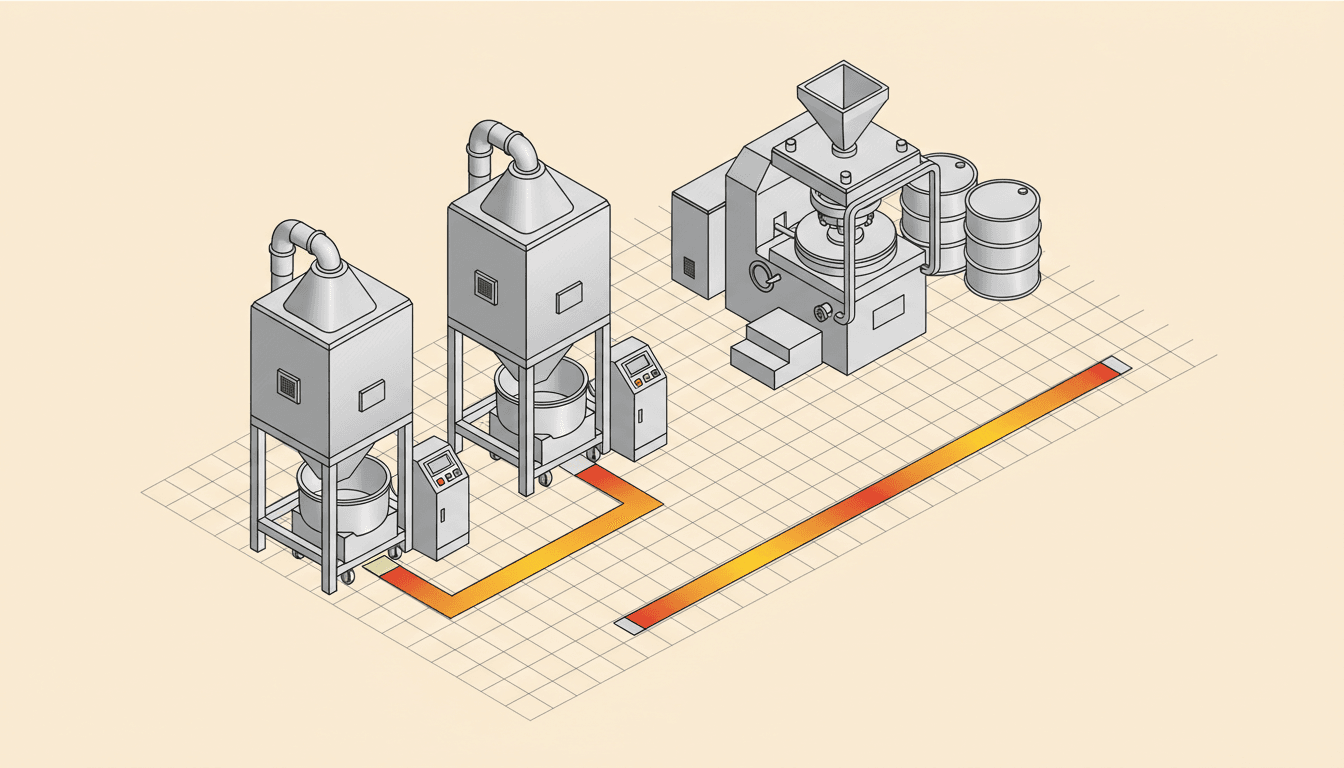
After a breakdown, move a task only if the breakdown blocks it, puts its material at risk, or threatens a commitment. Leave work in progress where it is. Five questions sort every task in the outage window into three groups: move, wait or stay.
The questions are simple. The hard part is getting through every task before the floor starts improvising. Ask them in this order. The first two usually decide most of the plan.
1. What does the event block, and for how long?
List every task booked on the broken machine, every task that feeds it, and every task that needs its output. A reset and a three-day repair need different answers. If the repair time is unknown, plan for the likely case and set a time to look again. Tasks on other equipment, for other batches, usually stay.
2. Which material hold times does it put at risk?
Material waiting for the machine keeps aging. An intermediate that waits too long passes its maximum hold (shelf life) time and may be reprocessed or rejected. One used too early breaks its minimum wait. These limits often set the real deadline, before the repair does.
3. What is in progress and cannot move?
Tasks already started, or already released to the floor, stay where they are. Stopping work in progress to tidy the plan costs more than it saves, and the floor stops trusting the schedule. A task moves only if it physically cannot continue.
4. Which commitments are at risk?
Check release dates, client slots and shipments. A task that looks safe may sit on the critical path to a date. Decide early which commitments you will protect, because that decides which tasks move.
5. Who downstream has to act?
Supervisors, the QC lab, maintenance, the warehouse, and customer service if a date moves. A good reschedule is useless if the people affected find out when the floor runs into it.
A worked example
Illustrative only. Dryer 1 trips while drying Batch A. The repair time is unknown, so plan for about six hours and look again at midday. QA has opened a deviation.
| Task | Q1 Blocked? | Q2 Hold time at risk? | Q3 In progress? | Q4 Commitment at risk? | Q5 Who acts | Decision |
|---|---|---|---|---|---|---|
| Dry, Batch A | Yes, on the dryer | Hold clock starts | Started, stopped by the trip | Release date | QA, maintenance | Waits. QA decides: resume or reprocess |
| Blend, Batch A | Yes, needs dried granules | Waits on Batch A | No | Release date | Supervisor | Moves |
| IPC sample, Batch A | Yes, timed to end of drying | No | No | No | QC planner, analyst | Moves. QC told |
| Granulate, Batch B | No, but its output queues for the dryer | Granules age toward maximum hold | Released | Shipment date, through Dry B | Supervisor | Stays. Watch the hold limit |
| Dry, Batch B | Yes, booked on the dryer | Clock runs if delayed | No | Shipment date | Planner | Moves to the next free, qualified dryer |
| Compress, Batch C (press) | No | No | Released | No | None | Stays |
| PM on press, this afternoon | Technician needed for the repair | No | No | PM compliance | Maintenance planner | Moves. Planner decides |
| Granulate, Batch D (other line) | No | No | No | No | None | Stays |
Eight tasks in the window. One waits on QA, four move and three stay. Every decision has a reason someone can check later.
The test is simple. Running it is not.
That table took eight tasks and looks tidy because it is finished. Getting there by hand is another matter, and a real outage window usually holds far more than eight.
The answers live in different systems. Equipment status sits in the Manufacturing Execution System (MES) or the maintenance system. Operator availability and certification sit in training records. Sample timing sits in the Laboratory Information Management System (LIMS). Material status sits in the ERP. Hold times often sit in a batch record. By hand, that is a series of calls.
The clocks keep running while you collect them. Hold times do not pause for the phone call. By the time the last answer comes back, the first one may already be out of date.
One move changes the next answer. Sending Dry B to another dryer only works if that dryer is qualified for the product and clean, and someone certified is on shift. It may also displace whatever was booked there, and that task now needs the same five questions.
The estimate changes. Six hours at nine o'clock can become a full day by noon. Then the sort starts again, from a plan that has already moved.
So planners do what anyone would. They answer for the tasks they can see, and the rest surface when the floor runs into them. That is not a planning failure. It is more than one person can hold in their head during an outage.
Where the search can stop being manual
This is the part of the job Adaptive Scheduling is built to take on. The five questions stay the same. What changes is who does the searching.
In Bodhee Production Scheduling, the work starts once the event is logged, by a connected system or by the shift lead. Agents pick it up, and the schedule is re-solved against every live constraint. Work in progress stays where it is, and only what the event touches moves. Where Bodhee Quality Control Scheduling and Maintenance Scheduling also run, the linked lab and maintenance work moves in the same pass.
The decision stays with people. The planner sees which constraints a change would break, then approves it. QA still decides what happens to the batch.
To see this on a real plan, our recorded demo "Three disruptions, one schedule" follows a reactor breakdown on an API line. For the full response, from the repair estimate to telling the people affected, read How to reschedule production when a machine breaks down.
Watch the recorded demo
Frequently asked questions
What if the repair time is unknown?
Plan for the likely case, move only what that case touches, and set a time to look again. Widening the rebuild later is cheaper than undoing a large one.
Should a planner move tasks to keep equipment busy?
Only where it does not disturb work in progress or create new handovers. Filling a gap pays off when the people and materials for the new task are already in place.
Who decides if a stopped batch can resume?
QA. A trip in the middle of a step is a deviation, and QA assesses the batch. The planner's job is to show QA the options and the hold-time limits, early.
Which questions matter most when time is short?
Questions 1 and 2. What the event blocks and which hold times it puts at risk decide most of the plan within the first hour.
Bodhee: Dynamic Manufacturing Scheduling
Bodhee delivers dynamic, constraint-aware scheduling for Production, Quality Control, and Maintenance on one live model of your plant.

See it in action
Production Scheduling
Explore the deployments, architecture, and ROI math behind dynamic scheduling for your plant.
See Production Scheduling