
Handling demand spikes: dynamic scheduling for seasonal production swings
Seasonal demand isn't a forecasting problem. It's a feasibility problem. The campaign mix you can run in November is not the campaign mix you can run in March, and the schedule has to know that.
 4 May 20266 min read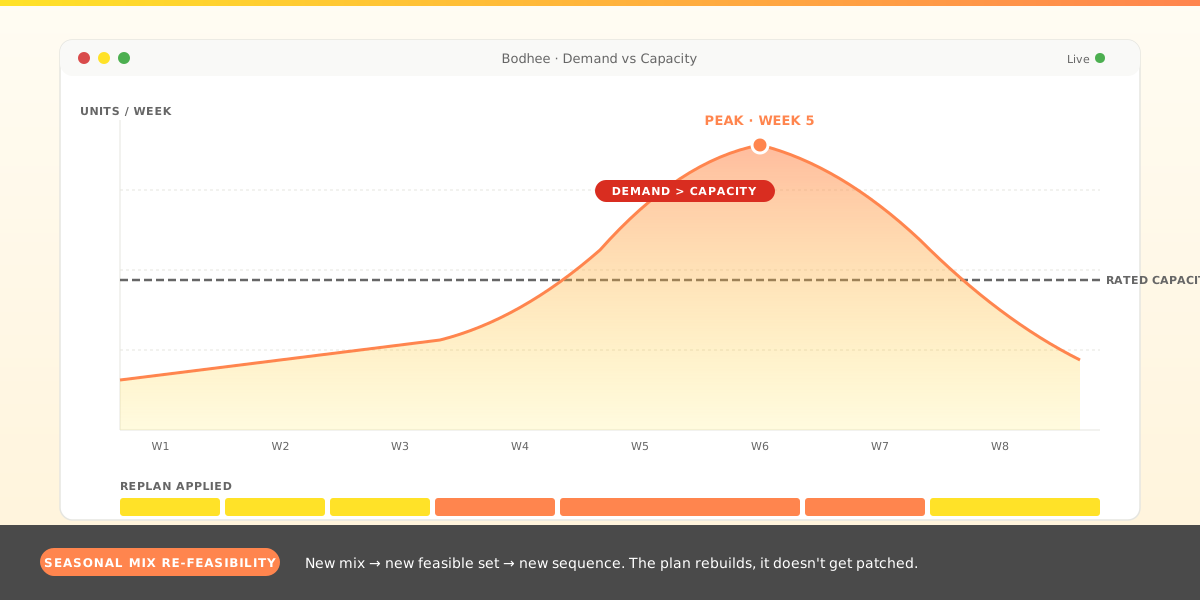
Seasonal demand isn't a forecasting problem. It's a feasibility problem. The campaign mix you can run in November is not the campaign mix you can run in March, and the schedule has to know that.
The festive trap
Every process plant has a season. Confectionery has Diwali, Christmas, and Eid. Beverages have summer. Pharma has flu cycles and vaccination drives. Specialty chemicals have the paint-and-coatings season. The list is different for every vertical, but the pattern is the same: a handful of weeks where demand triples, the mix changes, and the floor is expected to absorb both shifts at once.
The standard response is one of two coping strategies. The first is to over-stock safety inventory ahead of the season — which buys flexibility but ties up cash, eats warehouse space, and creates expiry risk on perishables. The second is to burn weekend overtime — which buys throughput but burns out planners and operators, and the OTD numbers slip anyway because the schedule wasn't designed for the new mix.
Neither response addresses the actual problem. The actual problem is that demand spikes are not a forecasting failure. The forecast is usually correct. The plan that follows from it is what breaks.
Why it's a feasibility problem, not a forecast problem
A demand spike changes three things about the production environment, often simultaneously, in ways the macro plan didn't model.
The mix shifts. Festive SKUs replace standard SKUs. The new mix uses different equipment routings, different raw materials, different changeover sequences. The capacity number on paper hasn't changed. The capacity number for this mix is now lower, sometimes substantially.
The constraints tighten. Cleaning cycles between SKUs become more expensive because the changeovers are more frequent. QC capacity gets squeezed because more batches are entering the test queue per week. Maintenance windows that fit comfortably in March don't fit in November because the line is running 22 hours a day instead of 16.
The priority order changes. A customer commitment that would have been negotiable in a normal week is non-negotiable in the run-up to a retail moment. Penalties for missing a Diwali shipment dwarf penalties for missing a March shipment. The optimisation function should weight on-time delivery higher; most static plans don't change their weights.
None of these are forecasting problems. The forecast knew the spike was coming. The schedule didn't know how to absorb the shift in feasibility, constraints, and priorities that the spike implied.
What dynamic re-feasibility means
Dynamic re-feasibility is the discipline of re-evaluating the schedule against the changed feasibility space — not just the changed forecast — every time the inputs move. Three properties matter.
Constraints get re-evaluated, not assumed. When the mix shifts to a festive SKU set, the engine has to recompute which lines can produce which SKUs, what changeover sequences are now mandatory, and what cleaning recipes apply to the new transitions. A static plan assumes these are the same as last quarter; a dynamic plan checks.
Objectives get re-weighted, explicitly. On-time delivery is weighted higher in festive weeks because the cost of lateness has gone up. Inventory cost is weighted lower because the customer would rather have it on the shelf than hear about your working capital. The engine surfaces the trade-offs; the operations leadership sets the weights.
Re-planning becomes routine, not heroic. When a single batch slips, when a delivery shifts, when QC opens an investigation, the schedule rebuilds. The replan that used to take half a shift takes the engine a few minutes. The festive season stops being the season planners dread.
What this looks like on a line
Picture a confectionery plant heading into Diwali. Demand for two festive SKUs doubles for six weeks. The standard SKU mix continues, just compressed.
Under a static plan, the planner picks an SKU sequence on Monday that was reasonable a quarter ago, runs into a changeover problem on Tuesday, retypes the plan on Wednesday morning, asks for overtime on Thursday, and ends Friday with two SKUs short and one over-produced.
Under a dynamic plan, the engine reads the new demand profile, recomputes the feasible set of campaigns for the new mix, picks a sequence that minimises changeover hours given the new transition pairs, leaves room for the QC capacity cap, and re-evaluates whenever an input moves. The Monday plan is feasible. The Wednesday replan takes ten minutes. The Friday number lands closer to the demand.
The number that changes is not the heroism of any individual planner. It is the OTD that the customer sees, the changeover hours the line absorbed, and the safety stock the company didn't have to fund.
How Bodhee Production Scheduling handles it
Bodhee Production Scheduling is the production-side product in the Bodhee enterprise SaaS product family. For seasonal scheduling, three techniques work together.
Constraint programming encodes the rules — equipment routing, changeover requirements, cleaning recipes, qualifications, materials. When the mix shifts, the engine recomputes feasibility from the encoded rules, not from a memory of last season.
Multi-objective optimisation searches the feasible space for the schedule that best balances your objectives. Operations leadership can re-weight on-the-fly — pushing OTD up during peak weeks, pulling it back during normal weeks — and the engine surfaces the trade-offs explicitly so the change isn't a black-box decision.
AI agents watch the live plant. When a batch slips, a delivery shifts, or a QC sample triggers an investigation, the agents re-trigger the optimisation cycle. A new feasible plan lands in planners' hands in minutes, not after the next meeting.
Typical outcome ranges
Across regulated process manufacturing deployments, the outcome ranges Bodhee Production Scheduling tends to deliver are:
- +10–15 percentage points improvement in OEE
- +15–25% on-time delivery
- +15–25% changeover efficiency
- −10–20% WIP inventory
- −60–80% planner scheduling effort
- Hours → minutes in rescheduling cycle time
Based on Neewee deployment observations in regulated process manufacturing. Outcomes vary by plant complexity, integration depth, and existing scheduling maturity.
Where this leaves you
If your plant treats seasonal demand as a six-weeks-of-overtime problem, the cost is hiding in plain sight. Over-stocking buys you flexibility you've already paid working-capital interest on. Overtime buys you throughput at the price of operator burnout. Neither survives the fact that the schedule wasn't built for the new mix.
Dynamic scheduling treats the season as a re-feasibility problem and gives your planners minutes-not-shifts response time when the inputs move. Request a demo to see Bodhee Production Scheduling absorbing a demand spike on a plant like yours, or read the product page for a deeper walk-through.

See it in action
Production Scheduling
Explore the deployments, architecture, and ROI math behind dynamic scheduling for your plant.
Learn more